

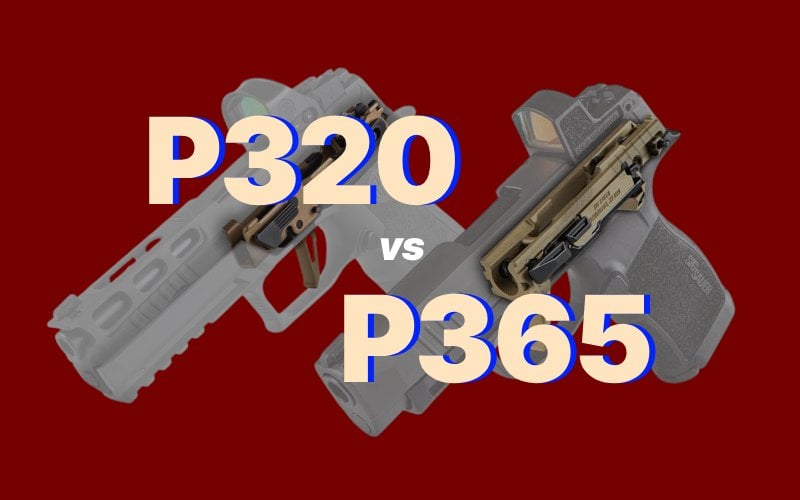
While P320 and P365 may appear similar on the surface, they are built around completely different design principles. The engineering teams approached each platform with unique objectives, which shaped their core architecture. To help you understand how exactly these two platforms are different from each other – both internally and externally – we’ve put together this comprehensive comparison guide.
The Genesis of P320 and P365
The story of the SIG P320 story starts with Sig taking their hammer-fired P250 platform and converting it to striker-fired. Released in 2014, this modular design focused on versatility and customization. The engineering challenge was converting a traditional hammer mechanism into a reliable striker system while keeping the platform’s modularity.
The P365 came from a completely different approach. Launched in 2018, it was built from scratch as a striker-fired concealed carry pistol. Every component was designed for maximum capacity in the smallest within minimal dimensions. Instead of adapting existing technology, Sig’s engineers started fresh, creating what many consider the biggest advancement in concealed carry design in decades.
Fire Control Unit
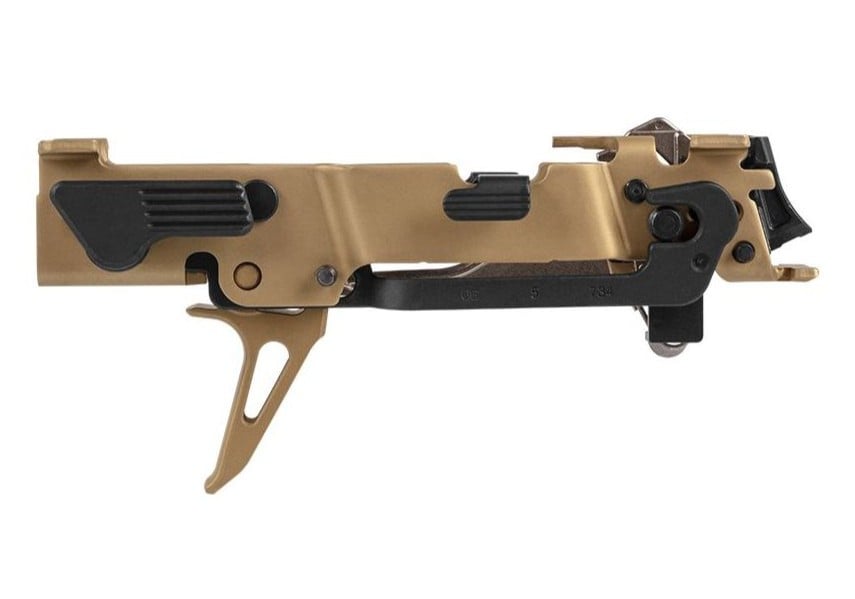
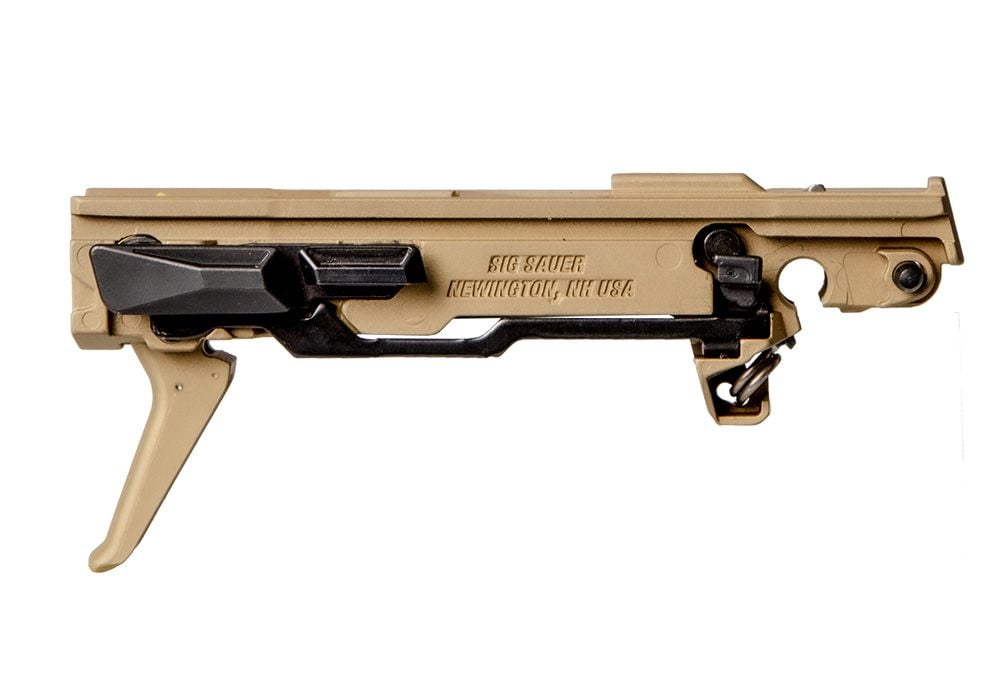
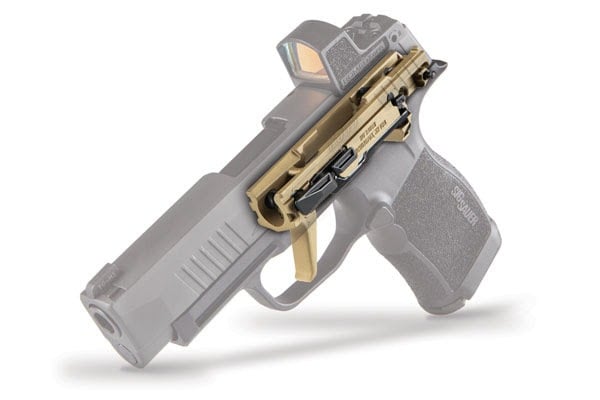
The Fire Control Unit (FCU) is the heart of both platforms, and notably, it is the only part of the firearm that is serialized, but the layout and size are different. The P365’s internal chassis is slimmer, which helps explain how the pistol maintains such a compact overall profile while still offering impressive capacity in many configurations.
Also, the FCUs are secured differently in the pistols. To remove the FCU on the P320, you take out the takedown lever (which acts as the retaining pin itself) and hinge the unit out from the front. On the SIG P365, the FCU is held in place by a single retaining pin located at the back of the frame; you simply push this rear pin out, and the FCU hinges out from the back.
Sear Engagement
The P320 uses a dual-sear system, featuring a lower initial sear shelf with a secondary catch as backup safety. This creates redundant safety mechanisms where the sear and striker safety lever engage different portions of the striker assembly.
The P365 uses a single-channel sear housing with a deeper sear ledge for better engagement security. The sear has a secondary “foot” behind the primary engagement surface, creating a traditional backup system that makes accidental striker disengagement much more difficult.
Safety System
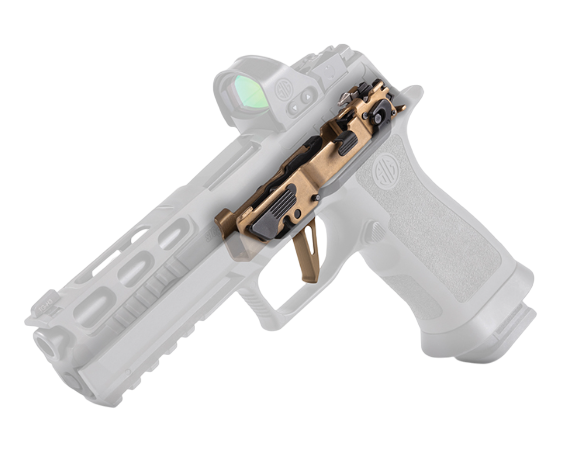
The P320’s safety system integrates the striker safety directly into the striker assembly itself, using a striker safety lever within the FCU. This system includes multiple internal safeties: the striker safety lever interfacing with sear housing, takedown safety lever, and out-of-battery safety through disconnector groove integration. The P320 doesn’t have a trigger safety blade, relying instead on its integrated safety systems. Post-upgrade P320 pistols feature a skeletonized striker to address earlier safety concerns, with relatively low striker spring tension to achieve the target 6.5-pound trigger pull weight.
The P365 uses a firing pin block system that prevents striker movement until the trigger is pulled. This is a more conventional approach to striker safety design. This plunger-style striker block works seamlessly with the mechanism while providing the secondary striker engagement surface as backup safety.
External Design
The full-size P320 measures 8.0 inches overall with a 5.5-inch height, weighing 29.4 ounces unloaded. These dimensions fit the standard Picatinny rail system and allow for barrel lengths from 3.6 to 5.0 inches depending on configuration. The extended grip surface allows a full 4-finger grip for users with larger hands, helping with recoil management and faster follow-up shots. The grip angle measures about 18 degrees from vertical, creating a natural point of aim for most shooters.
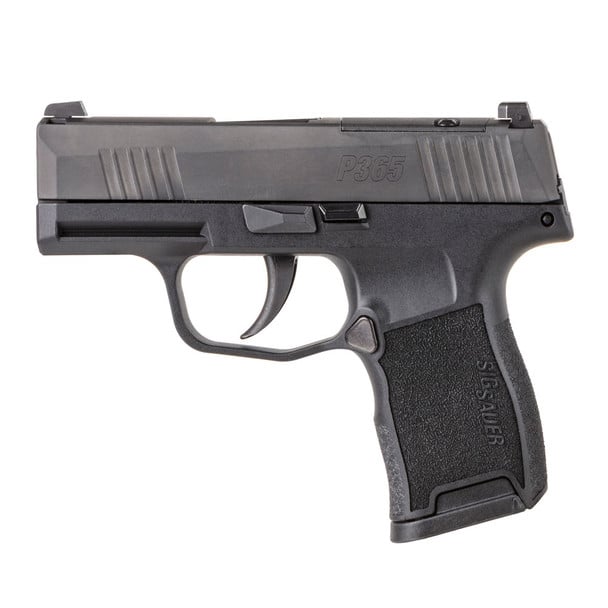
The P365 measures just 5.8 inches overall with a 4.3-inch height and 17.8-ounce weight. The pistol also has one of the lowest bore axis ratio, reducing muzzle flip despite the compact dimensions. The proprietary rail system requires specific adapters but maintains the pistol’s slim profile. The P365 uses a more vertical grip angle approaching 15 degrees, which some shooters find more intuitive for rapid target acquisition. However, the compact frame dimensions limit grip area, especially for users with larger hands (P365 X-Macro addresses this limitation by using a larger grip).
At GRITR Range, we have plenty of cool SIG Sauer pistols, rifles and PCCs for rent. Some rentals sport pre-installed optics. Come try these out!
Capacity and Calibers
The P320’s modularity extends to caliber options, supporting 9mm Luger, .357 SIG, .40 S&W, .45 ACP, and 10mm Auto. Magazine capacity ranges from 10 to 17 rounds in 9mm depending on frame size, with extended magazines available for competition use.
The P365 focuses primarily on 9mm Luger, though P365 380 ACP variants appeared in 2022 and 2025 (P365 LUXE). Standard capacity reaches 10+1 with flush-fit magazines, while extended magazines provide 12+1 or 15+1 capacity.
Recoil Management
The P320’s extra weight and longer barrel length provide natural recoil reduction advantages. The milled frame’s increased rigidity reduces flex during firing, maintaining consistent POI throughout extended strings of fire. The platform’s weight distribution naturally counters muzzle rise, enabling faster split times between shots.
The P365’s lightweight construction and compact dimensions create more noticeable felt recoil and muzzle flip. While perfectly manageable for defensive applications, the platform requires more deliberate recoil management techniques for rapid precision shooting. However, this characteristic makes the P365 extremely responsive to compensator installations, which dramatically improve its shooting dynamics.
Final Thoughts
The P320 and P365 are both successful SIG Sauer platforms, but they are not the same gun in different sizes.
The P320 stands out for duty use, home defense, competition, and broad customization. Its modular FCU system allows users to change grip modules, slides, and configurations with ease, and its larger footprint makes it easier to shoot comfortably over long sessions.
The P365 excels as a concealed carry platform. It offers impressive capacity, slim dimensions, and a wide range of carry-friendly configurations.
So the P365 is not a scaled-down P320, and the P320 is not just a larger P365. They are distinct platforms that happen to share SIG’s modular FCU concept.
3 Responses
Incorrect, look at the 2 fcu pictures. Stamped steel produces more rounded edges where cnc machined produces a cut with sharper edges. Thus, the p365 fcu is definitely cnc machined.
Is Sig going to use the newly patented Manuel safety? The one that doesn’t just block the movement of the trigger, but blocks the sear. Thank you.
Hey Jerry. Thanks for the question. We haven’t seen any updates suggesting SIG is adopting that design. From everything that’s been said publicly, the Angled Spade patent was their own independent upgrade concept, not a collaboration with SIG or something SIG was developing for production.