


Most gun owners spend a lot of time thinking about which defensive ammo to carry. Far fewer think about what happens to that ammunition once it’s been sitting in their gun for six months. That’s a problem – because the round you depend on when it matters most deserves more than a “set it and forget it” approach.
Table of Contents
Your carry ammo takes more abuse than you think
Every time you load, unload, press-check, or re-chamber that top round, it goes through a cycle of physical stress. The bullet nose slams into the feed ramp. The extractor claws at the case rim. The magazine spring puts constant pressure on the stack.
The most significant consequence of repeated chambering is bullet setback – when the projectile gets pushed progressively deeper into the casing. Even a few thousandths of an inch changes the internal volume of the cartridge, which means it generates higher pressure when fired. Too much setback, and you’re looking at a dangerous pressure spike that can damage your firearm – or worse.
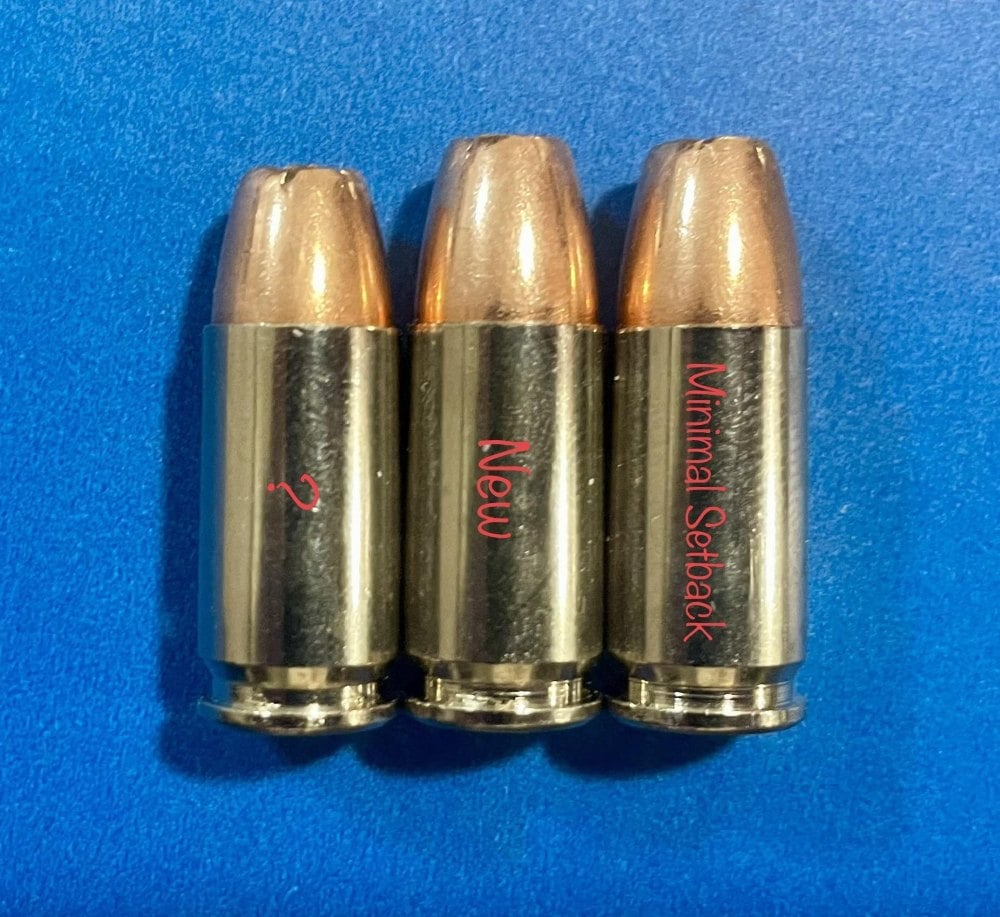
Bullet setback – by CATNIP_IS_CRACK (r/guns)
Some defensive ammo tolerates repeated chambering better than others. Hornady Critical Defense and Critical Duty rounds might be more prone to setback. On the other hand, Federal HST and Speer Gold Dot tend to handle repeated cycling with more consistency, which is a big part of why they’re so popular in both law enforcement and civilian carry circles.
This doesn’t mean you should ditch your favorite carry load just because it’s not one of those two. But it does mean that your choice of defense ammo should factor in how often you load and unload your gun.
Environmental factors are a slow burn
Bullet setback gets most of the attention, but it’s not the only thing degrading your carry ammo. Moisture, temperature swings, and body contact all play a role – especially for rounds that ride in a holstered gun all day.
Sweat introduces both moisture and salt. Heat and cold cycling – from the car, the range, or the outdoors – affects powder pressure and primer sensitivity. Over-oiling your gun can also damage your carry ammo, so can a gun cleaner if you have a habit of cleaning your gun with the mag loaded. Over time, these factors degrade both chemical stability and mechanical reliability. The damage isn’t always visible.
If you live somewhere humid – Florida, the Gulf Coast, anywhere tropical – this is worth taking seriously.
So how often should you actually rotate?
The answer depends on how you use the gun, but there are general guidelines:
Replacing carry ammo every 6 months is the baseline and is often recommended by ammunition manufacturers and law enforcement agencies. That’s reasonable for someone who handles their firearm regularly, does some administrative loading/unloading, and lives in a more or less stable, dry-ish environment.
If you load/unload your carry gun daily, dry fire regularly, and frequently press-check, you’re cycling those top rounds more than most. In that case, rotating every 3 months is more appropriate. The same goes for people living in a high-humidity or marine environment.
If your carry gun lives in a nightstand in a climate-controlled safe and rarely gets cycled, you could safely extend to once in a year – but still inspect periodically.
For rifles the standard is stricter. The mechanical action of a rifle is harder on cartridges than a handgun, and setback can occur after a single chambering. Many LE agencies hold to a one-and-done policy for patrol rifles: if it’s been chambered, it’s no longer a duty round.
Checking your ammo before you rotate
A basic inspection takes two minutes and should be part of your routine. Start by comparing the first round from your magazine against an unfired round from the box. Lay them side by side on a flat surface. If there’s a visible difference in how deep the bullet sits in the case, that round has experienced setback and should be retired. If you want to be more precise, use a set of digital calipers and compare against the manufacturer’s specified overall length.
Beyond setback, look for:
- Deformation of the bullet nose
- Dents or bulges in the case body or case mouth
- Corrosion on the case, primer pocket, bullet base
- Discoloration from sweat, oil, moisture exposure (some mild tarnish is normal, but heavy or greenish corrosion is not)
Building a simple rotation habit
- Mark your carry rounds. A small marker dot on the headstamp tells you how many times a round has been chambered. Once it hits five marks (or whatever your personal threshold is), it goes in the range bag.
- Place rechambered rounds at the bottom of the magazine, not back at the top. This distributes wear across multiple cartridges rather than beating up the same two rounds indefinitely.
- Store your carry gun as a complete unit. If you’re putting it in a safe at the end of the day, consider storing gun, holster, and loaded magazine together rather than breaking it down. Fewer loading cycles means less wear.
Should you shoot retired carry rounds at the range?
Most experienced shooters recommend firing retired carry rounds at the range. This works for some types of wear and tear, such as surface corrosion, discoloration, minor scratches from feed ramp contact, or exposure to moisture and sweat. However, bullet setback and primer damage are the exceptions.
If you have any reasonable doubt about a round’s integrity, discard it. If any round shows corrosion, dents, setback, cracks, rust, or fit issues, don’t fire it.
In case of misfires, hangfires, and squibs, a dud should be kept pointed in a safe direction for a short wait before you can safely clear it.
The bottom line
Rotating carry ammo isn’t paranoia but rather maintenance – the same way you clean your barrel and inspect your sights, you should be paying attention to what’s actually loaded in your firearm.
You don’t need to be obsessive about it. Modern defensive ammo is manufactured to tight tolerances and is genuinely durable. But durability has limits, and those limits shrink when ammo is handled frequently or stored poorly. The fix is easy: inspect regularly, rotate on a schedule, and shoot what comes out. The round that won’t go bang at the range is a lesson. The round that won’t go bang when you need it is something else entirely.
READ: CCW Rotation: Should Your Carry Gun Change With the Seasons?