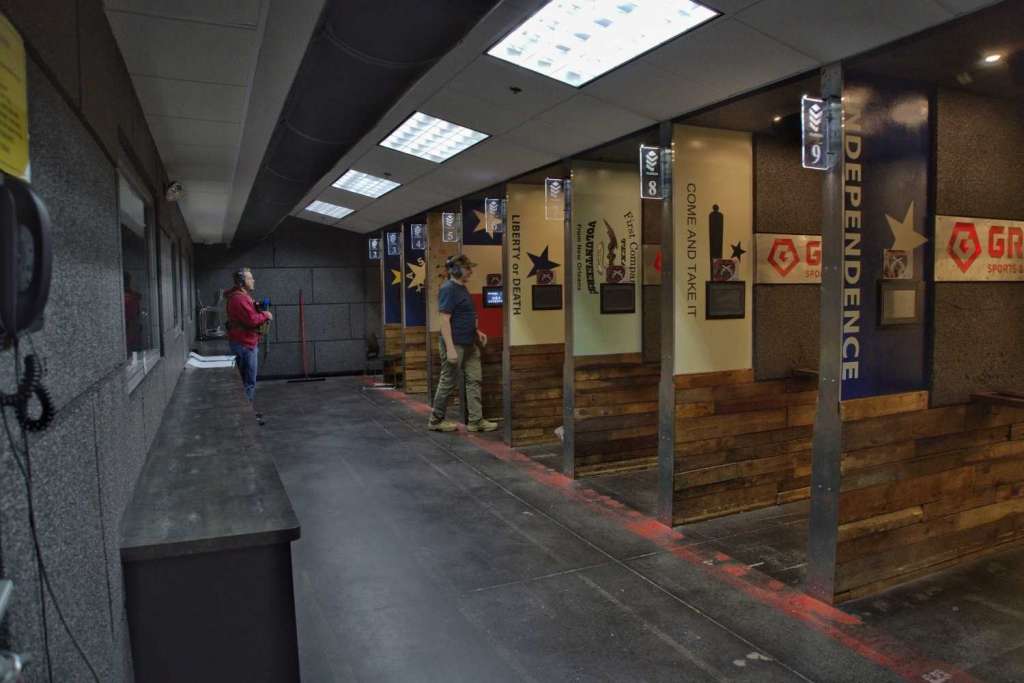

Firearms demand respect and responsibility. Whether you’re a civilian, law enforcement, or a competition shooter, nobody is immune to bad habits. So before you begin your hands-on training at an indoor shooting range like GRITR, here’s a quick guide to gun safety rules and etiquette.
Four Firearm Safety Rules: Do you really follow these?
These four rules sit at the center of gun safety basics for beginners. They get repeated so often they can sound routine, but they only work if you treat them like a checklist you actually live by.
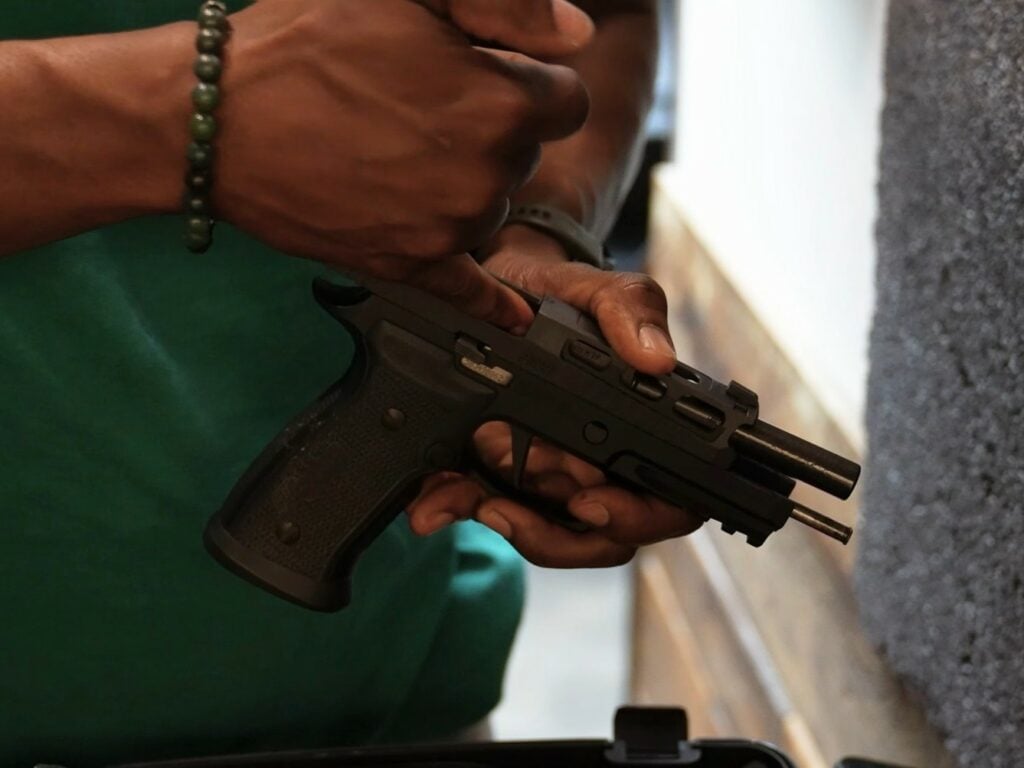
1. Treat every firearm as if it’s loaded
Even if you know a gun came out of the safe unloaded – or someone just told you it’s clear – the moment a firearm comes into your hands, check it.
Open the action, inspect the chamber, and check again.
That habit matters at the range, at home, and anytime you pick up a firearm from a case, safe, table, or vehicle. A lot of negligent discharges (NDs) happen because someone “thought” the gun was clear. Assumption doesn’t count here; verification does.
And if you ever wonder when a firearm should be unloaded? For general handling, transport, storage, and setting up, keep the gun unloaded whenever you are not actively using it in a lawful, controlled setting designed for shooting.
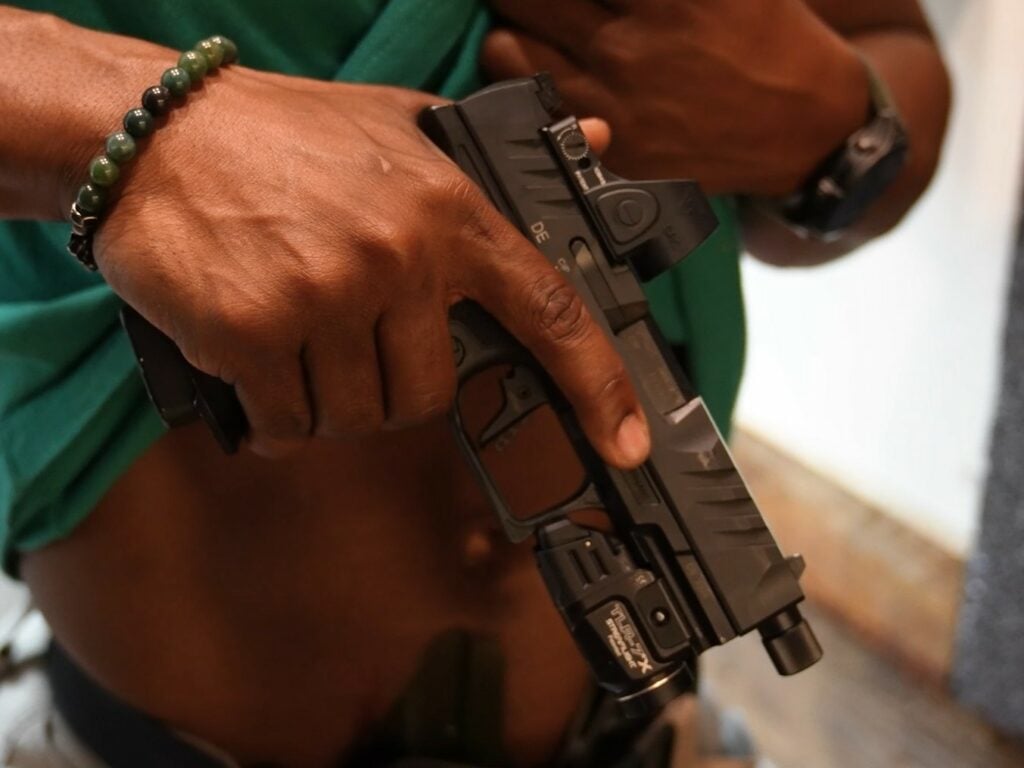
2. Keep your finger off the trigger until your sights are on target and you intend to fire
One of the fastest ways to spot improper handling of a firearm on a range is by observing people’s trigger fingers – there’s always someone whose finger drifts inside the trigger guard too soon.
Good trigger discipline means your finger stays straight and outside the trigger guard until you’ve made the decision to shoot. Many shooters index along the frame or slide. The exact placement can vary a little by platform, but the principle never changes: keep your finger off the trigger until you’re ready to send a round.
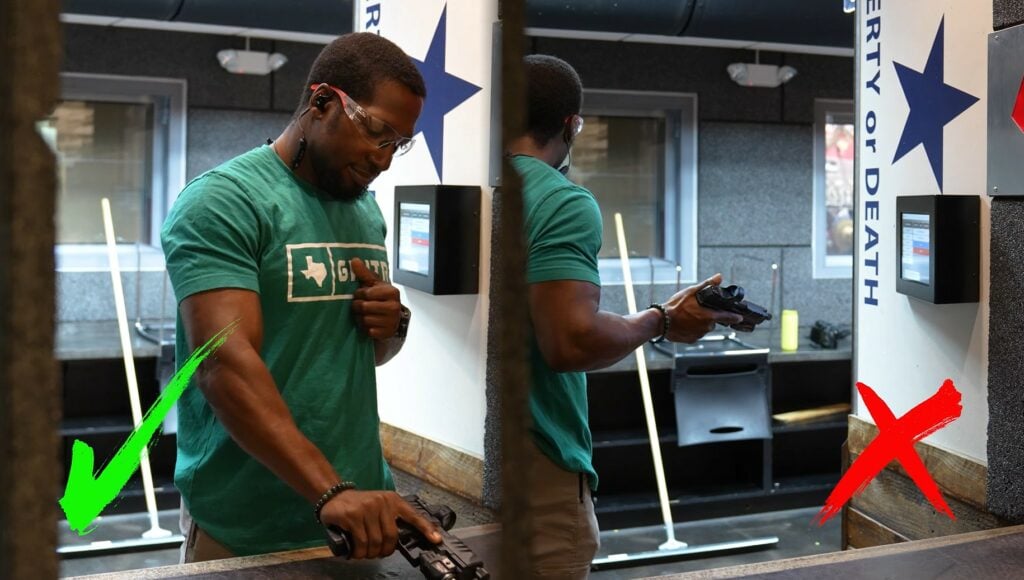
3. Never point the muzzle at anything you’re not willing to destroy
That’s what muzzle control means in plain language (some shooters call it muzzle safety). Where the muzzle goes, risk goes with it.
On the shooting range, that usually means keeping the firearm pointed downrange. At home, that means maintaining a safe direction any time you handle, check, clean, store, or move it.
People sometimes get casual during administrative handling – unbagging a pistol, setting up gear, putting a firearm away. That moment can actually cause the biggest problem of the day.
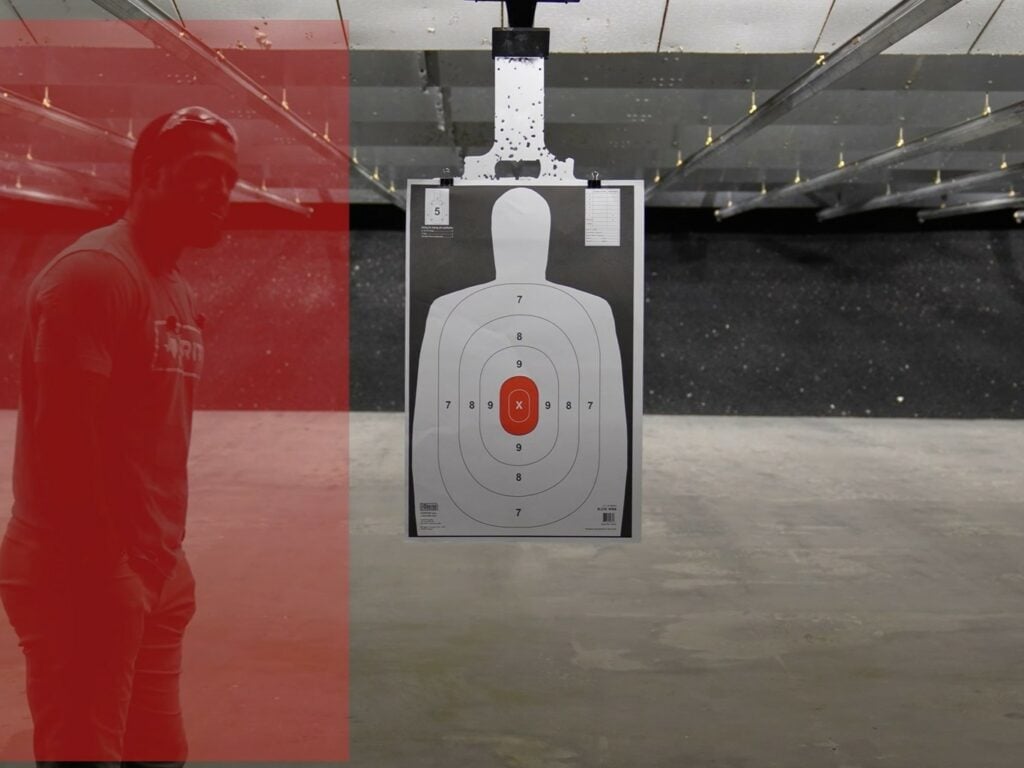
4. Know your target and what is beyond it
You need to know what you’re aiming at, what sits behind it, and what could enter the line of fire from either side or in front – this is essentially what they mean by know your target and beyond. Backdrop, barriers, side lanes, and surrounding movement all matter.
How these rules work together
Accidents usually don’t come from one mistake in isolation but rather a chain of errors. A shooter assumes the gun’s unloaded, muzzle drifts off, a shooter touches the trigger too early, and stops paying attention to surroundings.
So when people look up beginner gun safety, the answer shouldn’t stop at memorizing a poster with the rules. You need habits.
Basic
Handgun
Safety
Dallas-Fort Worth, Texas.
Dallas-Fort Worth, Texas.
If you are handing a firearm to another person, do this first
If you are passing a firearm to another person, the first priority is making the condition of the firearm obvious and safe. Clear it. Keep the muzzle pointed in a safe direction. Open the action if the platform allows it. Make sure the other person can verify that it’s unloaded.
Let go of the gun only when both people have clear control and the receiving person has confirmed the handoff.
Building your gun safety routine – quick tips
Before any live fire starts, slow down and run a mental checklist:
- Set gear down carefully
- Take out the firearm with the muzzle pointed in a safe direction
- Finger off the trigger
- Check chamber and mag
- Confirm condition
- Organize bench and ammo
- Stay aware of the people around
Slow down – rushing leads to sloppy handling.
Learn more about our facilities here
Knowing your firearm makes you safer with it
The four gun safety rules give you the framework. Knowing the anatomy of your gun (how it functions and where its controls sit) in your hands gives you control. That includes understanding:
- What type of firearm you have
- How it loads and unloads
- Where the action opens
- How to confirm clear condition
- Where the safety, if present, sits
- How to tell if the safety is on
- How the trigger system works
- Which parts move during operation
Gun safeties help, but they don’t save you from bad habits
A lot of beginners fixate on safety – where is safety on a pistol? how to tell if gun safety is on or off?
First off, safety mechanisms vary by firearm, location, and design. Let’s take handguns, for example: some have a manual safety (even multiple ones, like 1911 pistols); others do not have any at all or have only internal safeties that work independently of the shooter. That’s why knowing your gun’s mechanisms is so important.
Generally speaking, mechanical safeties are good because they add a layer of protection but they are never a substitute for awareness and discipline.
And no, the presence of a safety does not guarantee a gun won’t fire under every circumstance because the mechanism can break or you can forget to engage it.
Gun range safety and etiquette
A huge part of gun range safety has nothing to do with marksmanship. It has to do with listening.
If an RSO commands “cold range” or “ceasefire”, stop touching firearms and follow instructions instantly. Don’t negotiate. Don’t keep fiddling with magazines. Don’t squeeze in “one quick thing.”
A “hot range” means shooters actively engage targets. Follow all the commands commands and speak up if you see another shooter practicing unsafe habits.
Storage matters more than people think
Safety doesn’t stop when you pack up. When transporting your gear, double-check that magazines are empty and chambers are clear.
Store your firearms clear and secure in a dedicated gun safe or a simple TSA-approved lockbox so that they are accessible only to authorized users. If a firearm owner wants to protect family members, guests, and especially children, secure storage has to be part of the family firearm safety routine.
Remember that responsible ownership means planning for the moments when you are not physically holding the firearm.
Basic
Rifle
Safety
Dallas-Fort Worth, Texas.
Cleaning and maintenance are safety issues too
If you’ve ever asked why you should clean your firearm, the answer goes beyond keeping it looking nice. Dirt, residue, rust, worn parts, and neglected magazines can create malfunctions or hide problems that should be caught early.
That doesn’t mean obsessing over every speck of carbon. It means inspecting your equipment regularly, learning the manufacturer’s guidance, and making sure your gear stays in reliable condition.
BONUS: Gun Safety Quiz
You can take our gun safety test here: range.gritrsports.com/blog/firearm-safety-test/
The bottom line
The message stays simple: safe gun handling depends on repeatable habits:
- treat every firearm like it could fire
- keep the muzzle under control at all times
- keep your finger off the trigger until you are ready to fire
- check condition deliberately, not casually
- follow gun range rules without argument
- store firearms securely after use
- speak up when you see unsafe behavior
Lock ’em in with supervised training at GRITR Range – DFW’s place for beginners building pro habits.
GET TO KNOW GRITR RANGE
If you happen to be around North Richland Hills, don’t miss the chance to stop by GRITR Range. We have a top-notch facility designed for both beginners and seasoned shooters. GRITR Range boasts 22 cutting-edge lanes and can accommodate handguns in up to .50AE and rifles in up to .308.
Read what makes GRITR one of the best DFW shooting ranges in this post.